
Cashmere scarves in 3 sizes and 20 colors
Cashmere from the Changthangi goat, hand-combed at 4,500 metres in May. Spun and woven in Pathankot, dyed in Germany. Three shades are left undyed — the colour is the fibre's own.


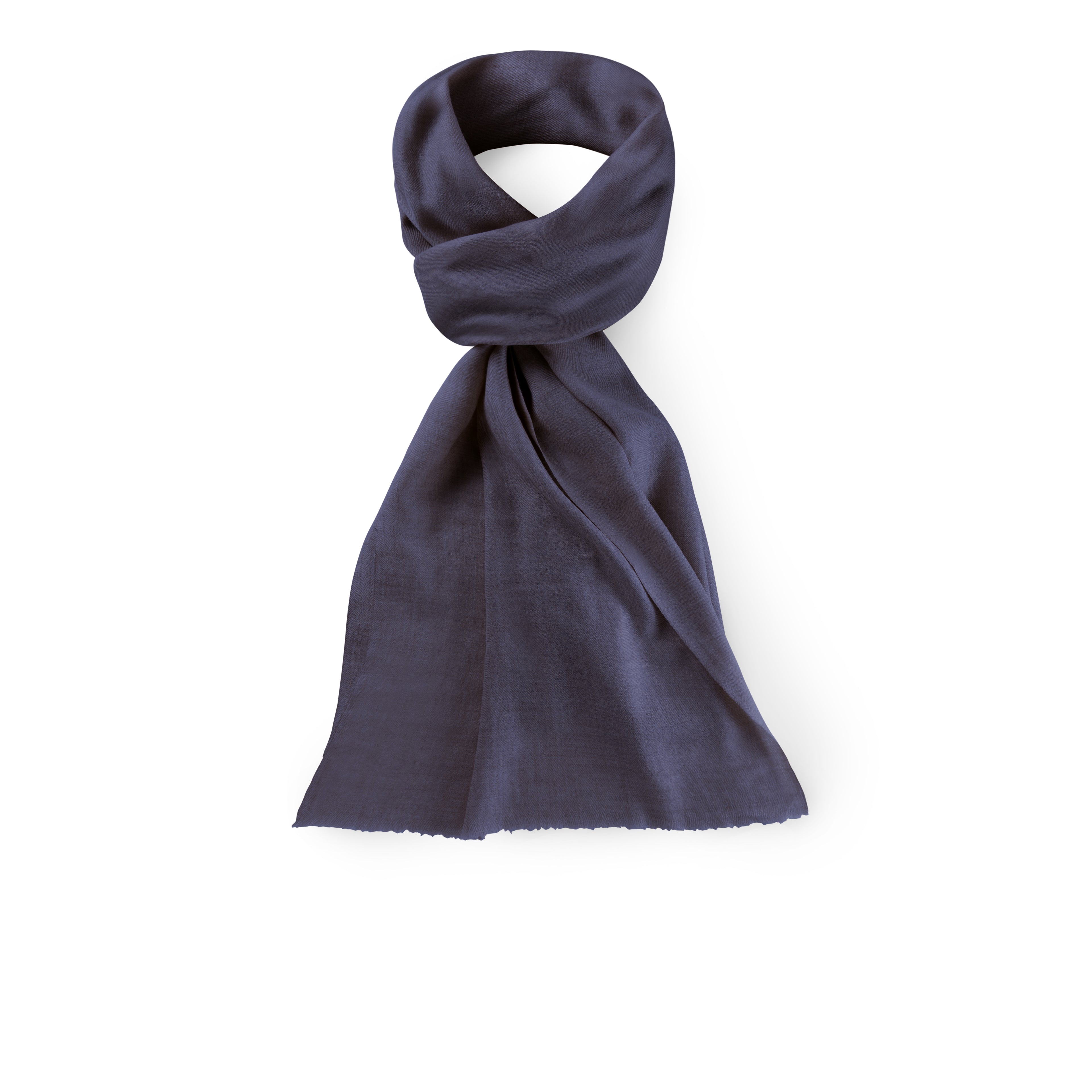

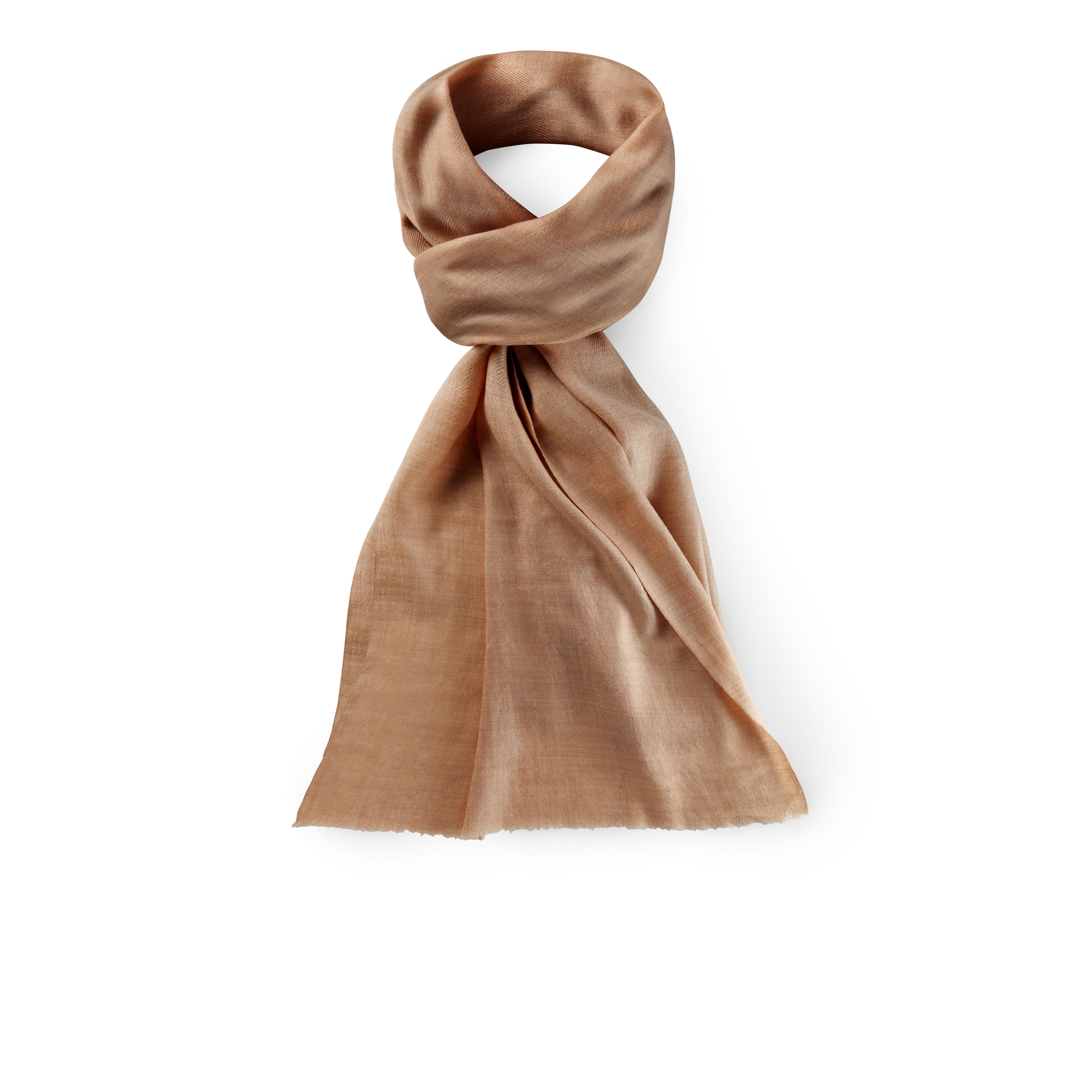
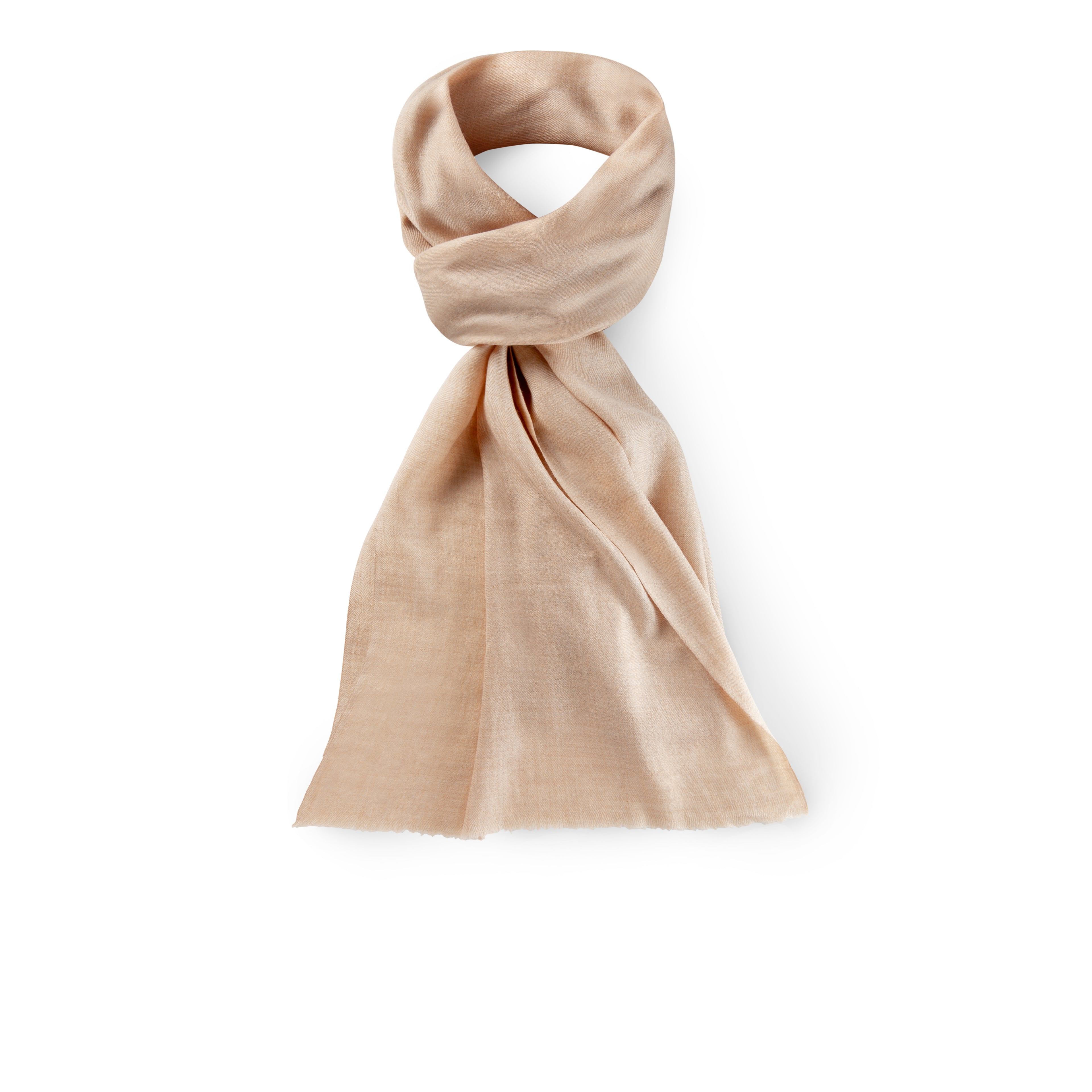
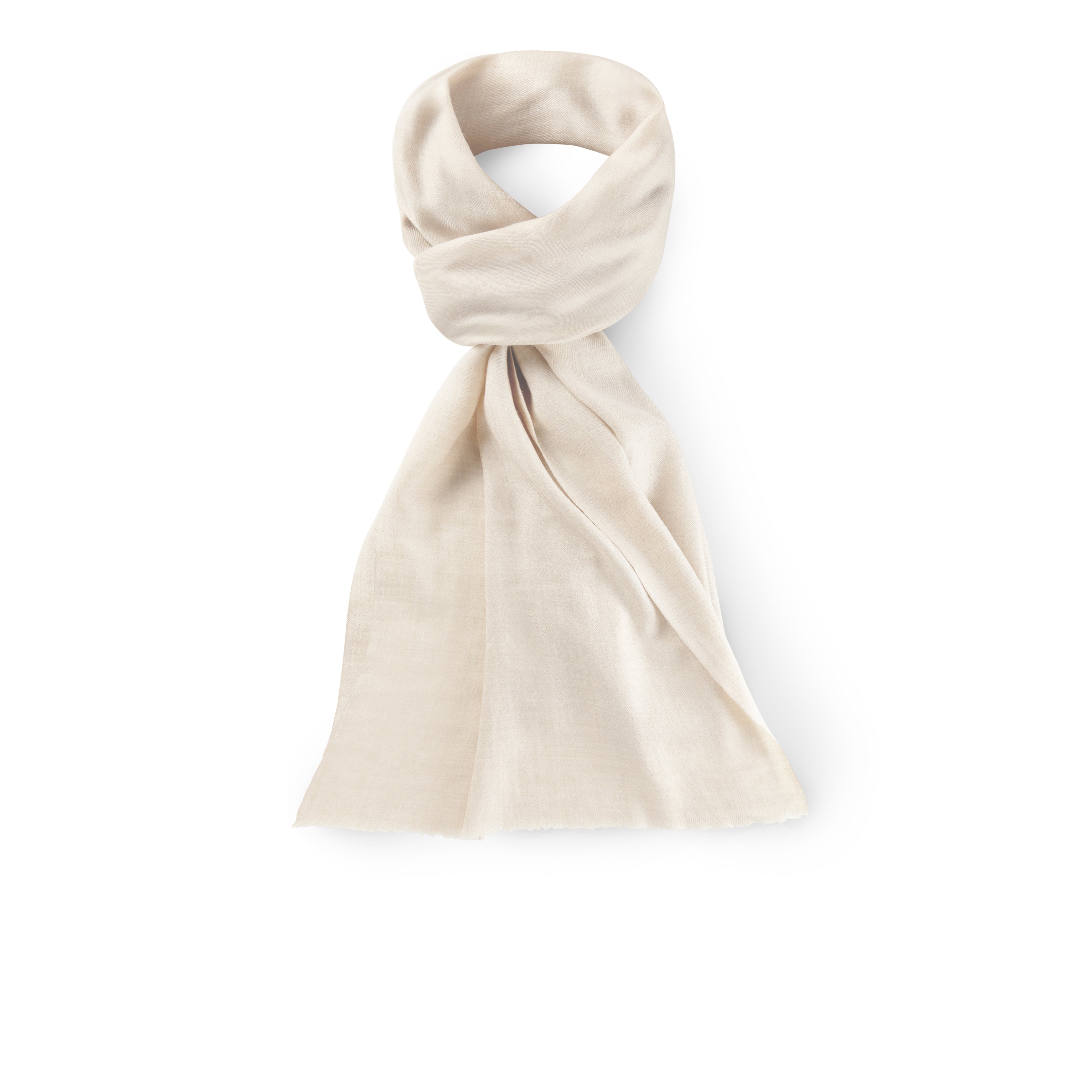


Not just any cashmere.
This is the cashmere of our nomad friends in Changthang, who live on the high plateau all year round with their goats. Their dedication makes a fibre of this quality possible. So instead of anonymous, mass-produced cashmere, choose a shawl with a route you can trace: to the families, the herds, and the land it comes from. Quality you can feel, in every sense.
Why it feels so soft
Changthangi cashmere
Other fibres
Fibre diameter in microns — finer is softer

All the colour, none of the compromise
- Strict EU standards, every drop of wastewater fully treated — nothing harsh on the fibre or your skin
- A wide palette of colours, dyed deep and even, that keep their shade for years
- Gentle low-temperature dyeing preserves the softness of the fine fibre
Prompt delivery
3 – 8 business days
Pure natural fiber
100% cashmere from the Changthang plateau
Crafted with integrity
Small herds & master weaving
Cashmere scarves in three sizes
Our cashmere scarves are made from the underwool of the Changthangi goat. It lives all year round on the Changthang plateau in northern India, at around 4,500 metres. In winter the temperature there drops below −40 °C. Against that cold the goat grows a very fine undercoat beneath its coarse outer hair — the harder the winter, the finer the fibre. It measures 10 to 14 micrometres; standard cashmere sits at 15 to 19. That is where the softness of a cashmere scarf comes from: the climate, not the processing. Goats in milder regions don't need the protection and produce a coarser fibre.
From goat to scarf
In spring the animals shed the undercoat by themselves. In May the nomad families comb it out by hand — they don't shear, because shearing takes the coarse outer hair into the fibre. The hair is then sorted by hand. Spinning and weaving happen in Pathankot in northern India, on semi-automatic looms, by more than 40 people. Dyeing happens in Germany. We have worked with the same families since 2015.
Which size suits you
We make one cashmere scarf in three sizes, and the size decides more about the look than anything else.
- 35 × 185 cm — the narrow scarf for everyday. It doesn't bulk up under a coat collar and folds double easily over a blazer or jumper.
- 70 × 200 cm — the most versatile size. Wrapped twice around the neck it warms like a shawl; worn open over the shoulder it falls like a scarf.
- 110 × 220 cm — the shawl. It sits across both shoulders, replaces a light jacket in the evening and works as a blanket when travelling.
Cashmere scarves for women and men
Our scarves get along particularly well with women, but men love them too. In the end, what matters for your style is colour, length, width and pattern.
Men almost always take one of the two smaller sizes: 35 × 185 cm or 70 × 200 cm. The 110 × 220 cm shawl is bought almost entirely by women. All twenty shades come in all three sizes.
One detail for men: fine cashmere wears faster against stubble. Our yarn is tightly spun and densely woven, and holds up to it.
Twenty colours, three of them undyed
White, caramel and brown are the animals' own colours; those three scarves are not dyed. The remaining 17 shades we dye in Germany. That gives us control over the palette and over what goes into the dye baths. Dyeing happens at low temperature so the fine fibre stays soft.
Buying a cashmere scarf whose origin you know
With most cashmere scarves there is no way to say which animals the fibre came from. With ours there is: the herds of the families we have worked with since 2015. If you want to know how the fibre comes about, read more about pashmina or about quality and production.